Welcome back to Part 2 of Finance Fridays: Choosing the Right Mortgage.
In Part 1, we talked about why rate isn’t everything. Prepayment privileges, portability, payment options, access to equity and the overall structure of your mortgage can all have a major impact on whether a mortgage is actually right for you.
Now, in Part 2, we’re talking about the rate itself.
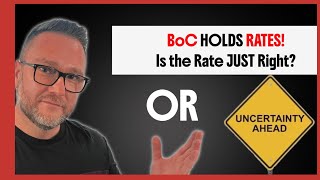
Should you choose fixed or variable?
Is a 3-year fixed better than a 5-year fixed?
Should you take a shorter term because you believe rates could come down?
Or is the certainty of knowing your mortgage payment more important than trying to predict where rates will go next?
The reality is: there is no single answer that works for every borrower.
In this week’s Finance Fridays, we break down:
🏦 FIXED VS. VARIABLE
A fixed mortgage can provide payment and rate certainty for the term, while a variable mortgage provides exposure to changes in the lender’s prime rate.
The question isn’t simply which one has the better rate today.
It’s about your risk tolerance, budget, future plans and ability to handle changes in borrowing costs.
📅 CHOOSING THE RIGHT TERM
1-year? 2-year? 3-year? 5-year?
A shorter term could allow you to revisit your mortgage sooner if rates decline—but what happens if they don’t?
A longer term may provide greater rate certainty, but you also need to consider your plans during that period and the potential cost of breaking the mortgage early.
📉 WHAT IF RATES FALL?
It’s tempting to build your mortgage strategy around the expectation that rates will be lower in the future.
But there can be a cost to waiting.
If you’re paying a higher rate today to take a shorter term or selecting a variable mortgage because you expect rates to fall, you need to understand how far rates would have to decline—and how quickly—for that strategy to work in your favour.
📈 WHAT IF RATES DON’T FALL?
Nobody can predict interest rates with certainty.
Inflation, economic growth, employment, the bond market and Bank of Canada monetary policy can all influence where borrowing costs go next.
Instead of trying to perfectly predict the market, build a mortgage strategy that you’re comfortable with under multiple scenarios.
💰 PUT THE RATE DIFFERENCE INTO DOLLARS
In Part 1, we looked at a simple example:
$500,000 mortgage
30-year amortization
3-year fixed term
At 4.14%, the monthly payment is approximately $2,417.
At 4.24%, the monthly payment is approximately $2,446.
That 0.10%—or 10-basis-point—difference works out to approximately $29 per month and roughly $1,463 in additional interest over the three-year term.
That’s real money and shouldn’t be ignored.
But it also puts the rate into perspective.
If another mortgage costs slightly more but provides features, flexibility or a structure that better suits your plans, you need to determine what those benefits are actually worth to you.
🎯 DON’T JUST PICK A RATE — BUILD A STRATEGY
Whether you’re:
🏠 Buying your first home
🔑 Moving into your next home
🔄 Renewing your mortgage
💰 Refinancing
📊 Restructuring debt
🏡 Accessing home equity
The right mortgage strategy can be different.
Instead of simply asking:
“What’s the lowest rate?”
Consider asking:
“Which combination of rate, term, features and flexibility makes the most sense for what I’m trying to accomplish?”
That’s ultimately what choosing the right mortgage is about.
👍 If you found this video helpful, LIKE the video.
🔔 SUBSCRIBE for more Finance Fridays mortgage, real estate and financial content.
💬 Let me know in the comments: Would you choose FIXED or VARIABLE today—and why?
📞 NEED HELP REVIEWING YOUR MORTGAGE OPTIONS?
Whether you’re buying your first home, upgrading, downsizing, refinancing or approaching your mortgage renewal, I’m here to help you understand your options and develop a mortgage strategy that fits your goals.
Anthony Venuto
Mortgage Broker Level 2
InTouch Mortgage Solutions
🌐 www.intouchmortgages.ca
📧 avenuto@intouchmortgages.ca
📱 416-895-8212
Let’s stay InTouch.
#MortgageRates #FixedVsVariable #CanadianMortgage #MortgageBroker #FinanceFridays